Custom RF power amplifier modules, 10 W to 300 W
Designed and manufactured in our Shenzhen factory using GaN technology, covering VHF to 6 GHz. Standard modules are stocked from 10 W to 300 W; higher power levels, connector types, and enclosure formats are configured per project for counter-drone, emergency communications, and laboratory systems.

Standard starter models
Selected amplifier modules currently in production. Full datasheets and test data available upon request with a quote.
5.2GHz 1 0W module for counter-drone front ends and 2.4GHz 10 0W module for long-range systems These are the standard reference builds used when a project starts from a baseline platform.
Planning the RF stage? Read the 2.4GHz drone jammer amplifier selection guide and the GaN vs. LDMOS: Thermal and VSWR Comparison.
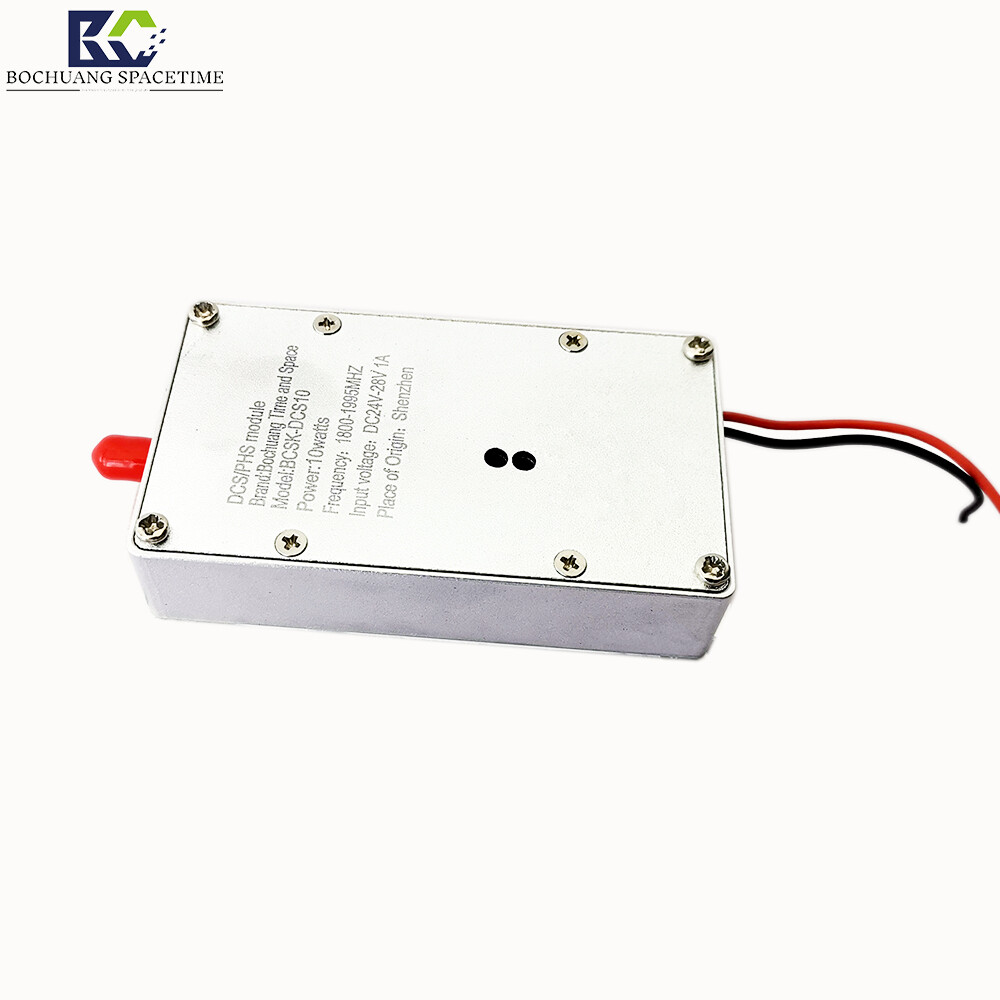
BCSK-SJD10 Low Distortion RF Power Amplifier Module 10W
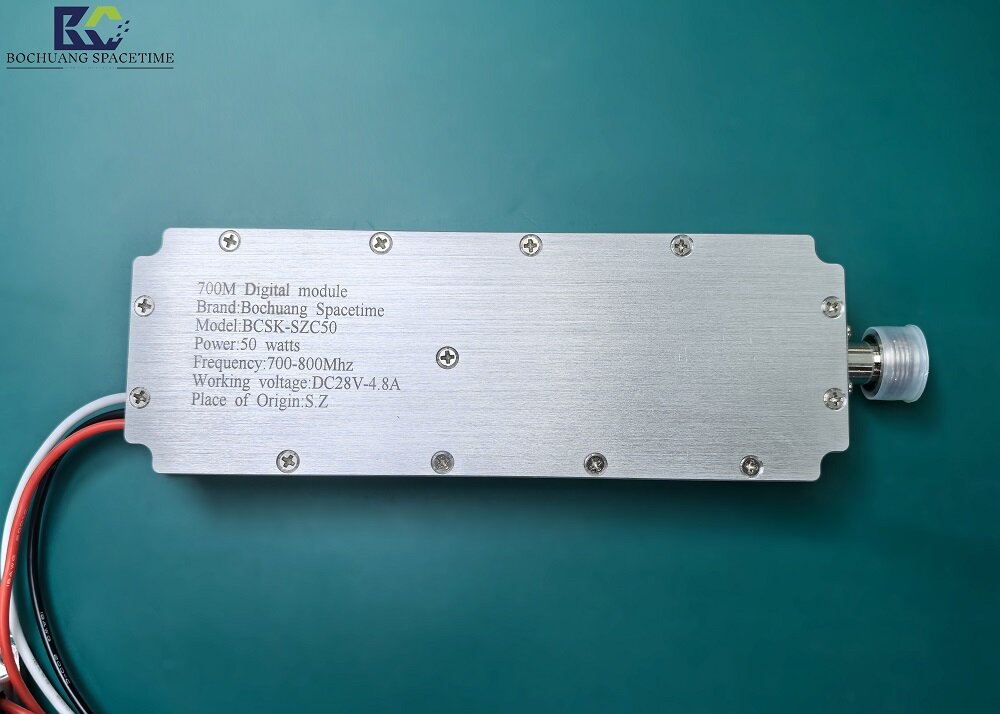
BCSK-SZC50 Anti-Load Shock Digital RF Amplifier Module
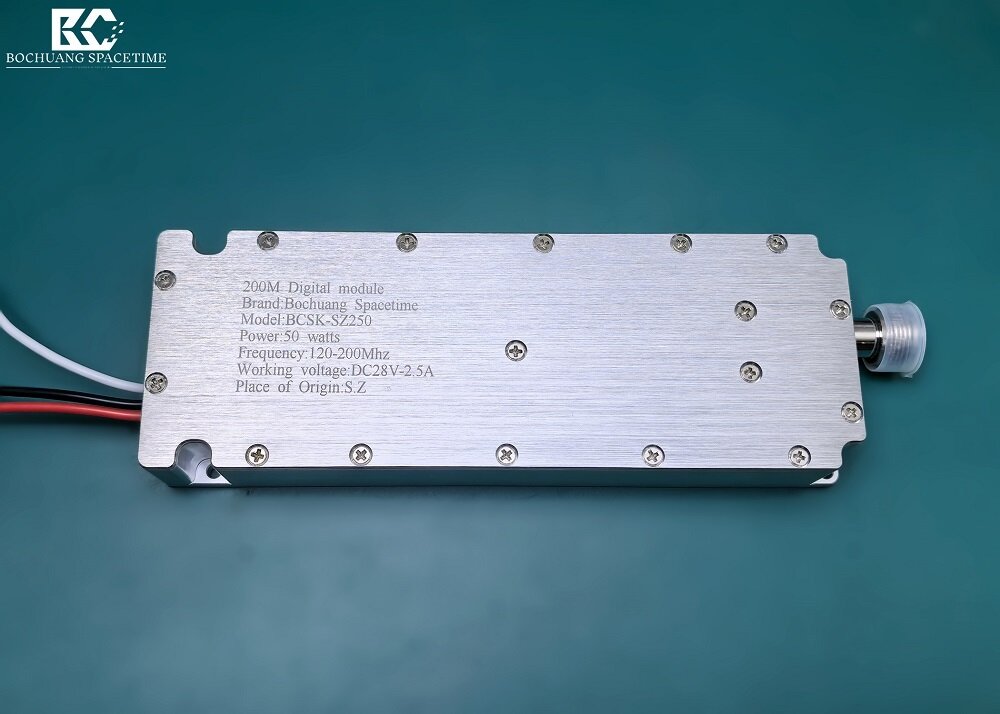
BCSK-SZ250 50W RF Digital Power Amplifier Module
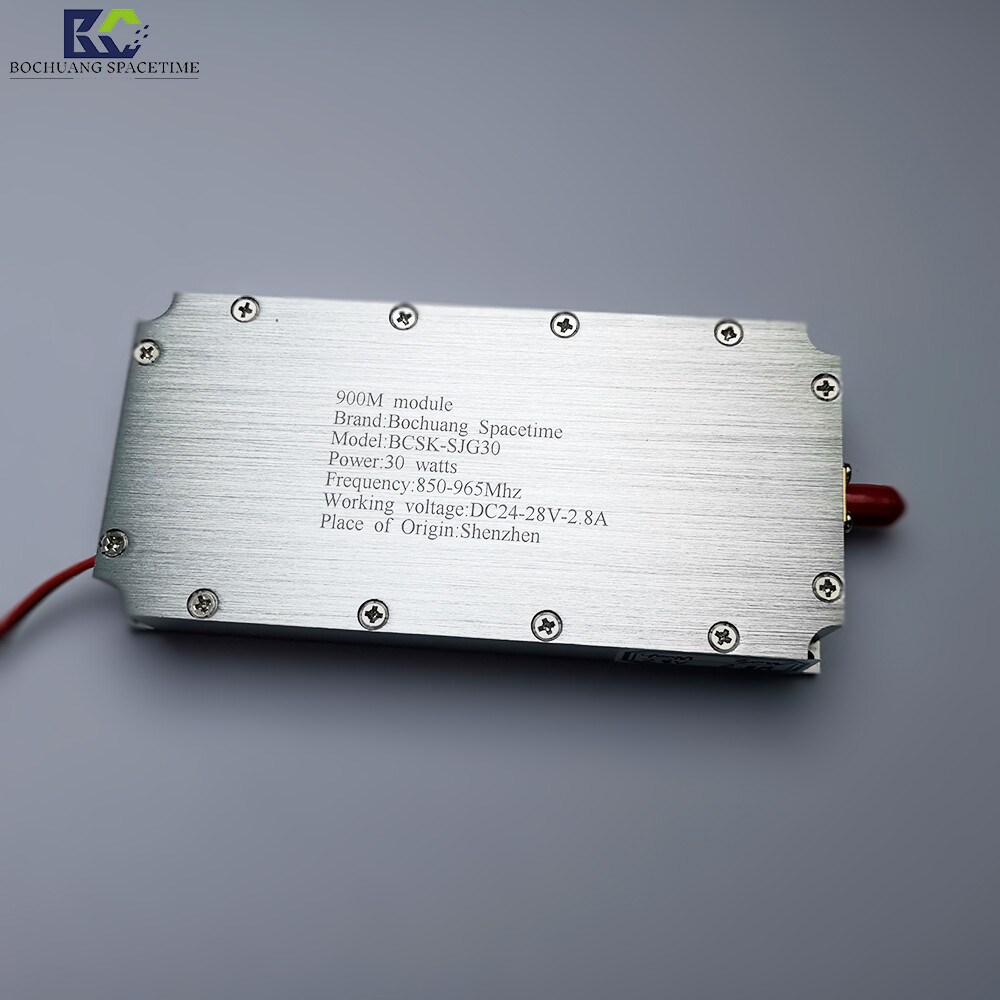
BCSK-SJG30 900MHz 30W RF Amplifier
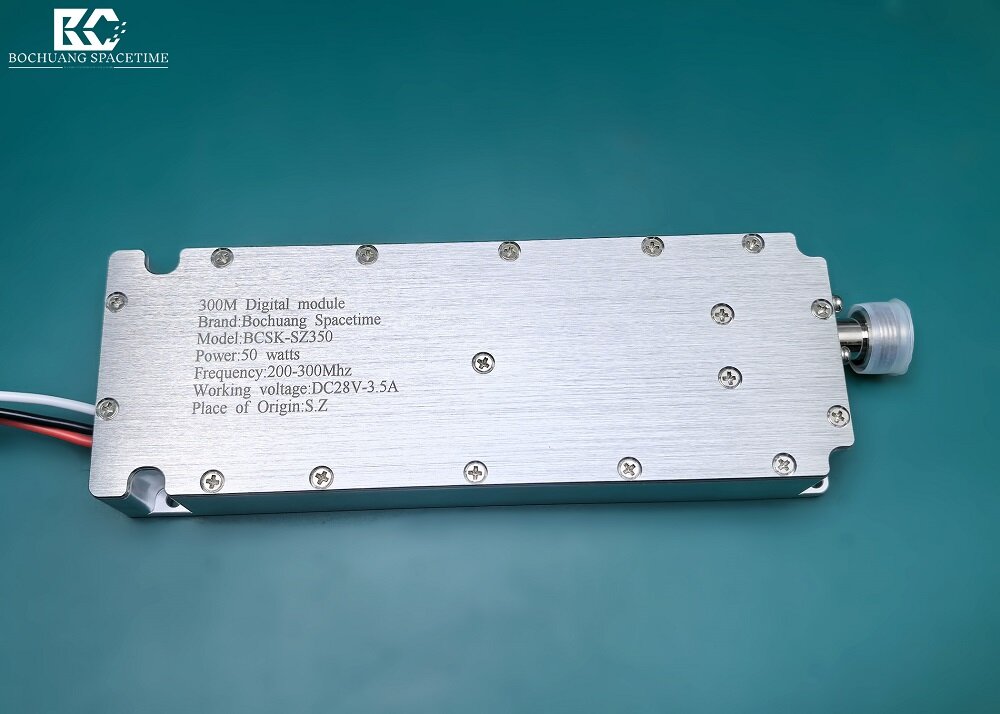
BCSK-SZ350 50W LDMOS Digital Power Amplifier Module
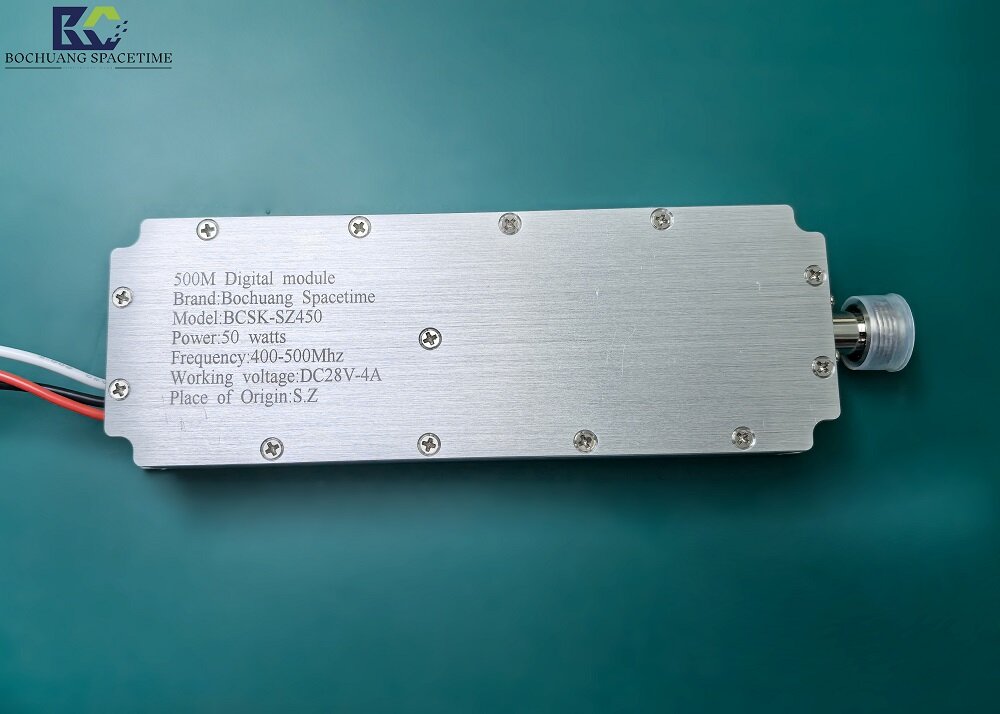
BCSK-SZ450 UAV Digital RF Power Amplifier Module
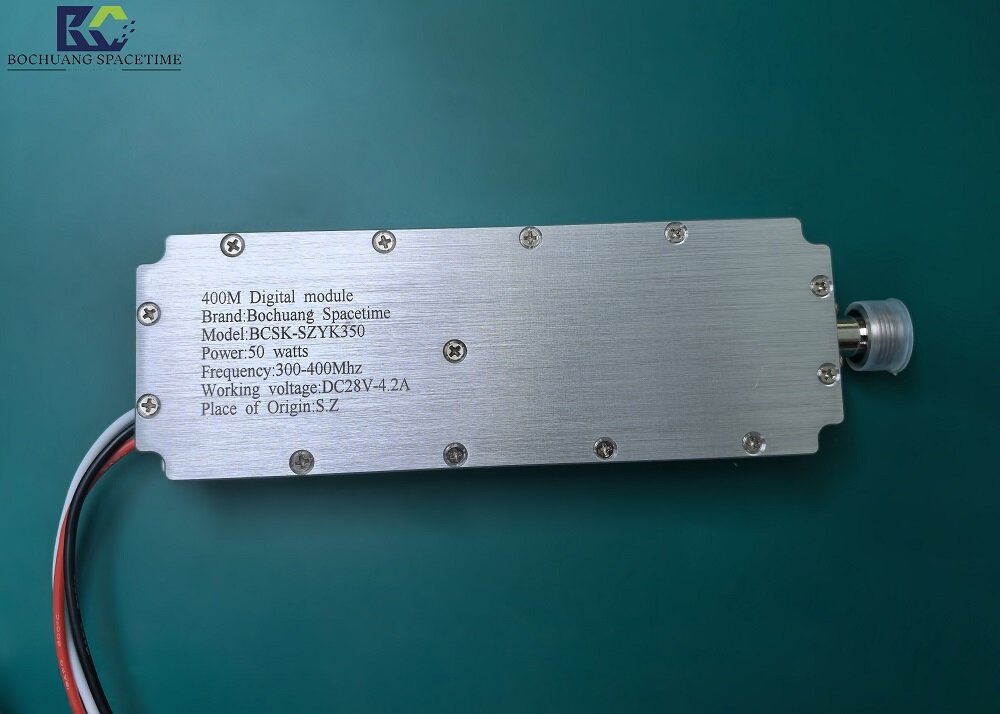
BCSK-SZYK350 LDMOS Power Module Digital Amplifier
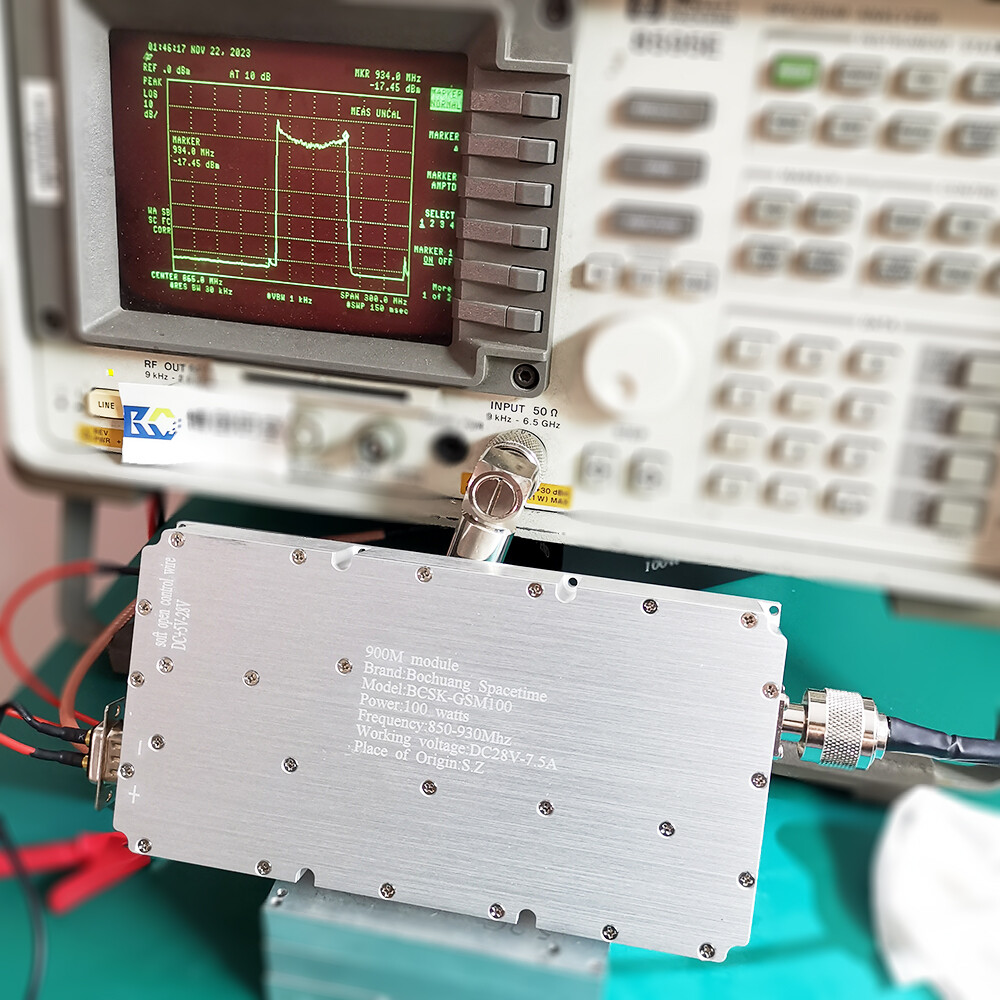
900M 100W RF Amplifier Wireless Module Wholesale
Design and manufacturing capabilities
GaN devices
Gallium nitride transistors deliver higher power density and efficiency than legacy silicon stages, keeping the module compact for a given output.
Wideband coverage
Standard designs cover VHF, UHF, and 800 MHz to 6 GHz bands. Custom center frequencies and bandwidths are quoted per project.
Custom output power
Standard modules operate from 10 W to 300 W. Higher levels and pulsed operation are custom-engineered for each application.
Connector and enclosure options
SMA or N-type connectors, flange-mounted and rack-ready module formats are configured at quotation.
Factory testing
Every module is tested for output power, gain, return loss, and harmonics, and ships with its factory test report.
System-level support
Filtering, power splitting, and monitoring units can be supplied with the amplifier, along with link planning support.
Where are these modules used?
Counter-UAS systems
RF front-end amplification for directional counter-drone and wireless interception systems.
Emergency communications
Boost signal and extend coverage for emergency vehicles and temporary base stations.
Broadcast links
Final-stage amplification and backup replacement in broadcast transmission chains.
Laboratory testing
RF field generation and immunity testing in shielded rooms and test laboratories.
Quote request checklist
Six points cover most of what we need to size a module. Copy the list, fill in your project values and send it with your inquiry.
01Frequency coverage
Target bands, any gaps that must remain clear, and whether a single wideband stage or multiple narrowband stages fit the enclosure.
02Output power and antenna gain
Required RF power at the antenna, feeder loss, and antenna gain so the amplifier rating covers the entire link budget.
03Duty cycle and thermal path
Continuous or pulsed operation, expected on-time per hour, and the heatsink or airflow available at the mounting point.
04Connector and cable
SMA or N-type connector, cable type and length, and whether a circulator or isolator is placed between the amplifier and antenna.
05Supply and current
DC bus voltage range and current headroom at the intended output level.
06Mechanical fit
Module footprint, mounting holes, weight limit, and space reserved for cooling.
Questions engineers ask
Can the operating band of an RF power amplifier module be customized?
Yes. Standard designs cover VHF, UHF, and common bands up to 6 GHz. For other requirements, we design to a target center frequency and bandwidth, confirmed with a quote.
How do I select the output power level?
Power depends on operating distance, antenna gain, and link budget. Share your coverage distance, antenna type, and target bands, and our engineering team will recommend the optimal power level and matching antenna.
Do you support OEM and bulk orders?
Yes. Enclosure markings, connector definitions, and production consistency can be customized, with tiered pricing and delivery schedules for volume orders.
What about lead time, testing, and warranty?
Standard models typically ship within 7–15 days after confirmation; custom designs are scheduled based on complexity. Each module includes factory test data and a warranty for the agreed period.
Send band, power, and quantity
Share the target bands, required output power, duty cycle, and order quantity. Our engineering team will respond with a module recommendation, price, and lead time.